Campsite Safety
(reviewed and updated Feb 2025, reviewed with minor updates Jan 2026)
Before your Visit:
-
- If you plan to use a gas cooker during your visit, please check to make sure any gas hoses and cooker connections are not damaged BEFORE your visit: A small leak of gas could cause carbon-monoxide poisoning or even create an instant fireball that would engulf a tent. Recommended guidance is that gas cookers and heaters should not be used inside tents or awnings.
-
- If you or anyone in your party plan to swim or bring a paddle board, canoes, kayak, dinghy etc, please make sure you bring suitable life-jackets, buoyancy aids or tow-floats with you.
Access Road:
-
 Access to Barefoot from Badswell Lane, Appleton, is via a private, single-track road. Vegetation along the sides of the road obscures the steep drop-off. Please only attempt to pass other vehicles in gateways or obvious passing places – DO NOT PULL OFF ONTO THE VERGE – or you’ll be in for a surprise and may damage your vehicle!
- Update Jan 2026: In addition, electric vehicles should not be driven through or parked in areas where the grass is long as there can be significant hot spots underneath them.
-
- There are two cattle grids along the access road. These can be slippery when wet for both vehicles and pedestrians. WE recommend you discourage your children from walking across them at any time – there are pedestrian gates beside each cattle grid.
Rural, Riverside Location:
-
- Barefoot Campsites is located on the banks of the River Thames, adjacent to Northmoor Lock and Weir. The lock and weir are not part of the campsite. Children must not cross the weir footbridge without appropriate adult supervision.
-
- The river is not fenced off, however, we allow stinging nettles and other vegetation to grow up along the banks of the river to deter children from trying to access the water. Please do not trample this safety barrier to retrieve balls or frisbees etc – the life of a child is more valuable.
-
- There are two stretches of riverbank which are kept clear though – one in each riverside camping field to enable easy access to the river for swimming and other water activities. Be sure to warn your children of the dangers of approaching the river and keep a close eye on them – especially younger children if they are likely to wander off.
-
- With easy access to open water, please supervise your children at all times and keep them safe.
-
- This is a rural site in which there are the expected hazards of nature including, but not limited to: uneven ground, rabbit holes, hawthorn trees, dog rose, brambles, stinging nettles, thistles, poisonous plants, slippery grass and slopes etc.
Campsite Facilities:
-
- We are continually monitoring the campsite and facilities, however, sometimes you may notice things before we do. Please report any maintenance issues to the office as soon as possible so that they can be dealt with swiftly. Thank you.
-
- Smoking is not permitted inside our bell tents, log pod, toilets or showers. If you do smoke, please be mindful of those down-wind of you and smoke in an area that will not cause a problem for others.
Campfires and BBQs:
-
- One of the main reasons people come to Barefoot is because you can have a campfire: Every pitch has it’s own designated campfire area on the ground.
-
- Do not assume that campfires are only lit in the evenings. Many campers cook their breakfast over the campfire, some keep it ticking over all day ready for brewing hot drinks, to keep warm or just to enjoy it! Embers and ash may still be hot, even when the fire itself is out.
-
- Do not allow your child to wander onto someone else’s pitch where their campfire may still be warm
-
- Please refer to our Campfire and BBQ Codes, even if you don’t intend to have a campfire or BBQ while you’re on site.
Water activities:
-
- Please note, wild swimming, paddle boarding, canoeing etc is entirely at your own discretion. If you plan to swim or bring your river craft, please refer to our Wild Swimming Code and Private Canoe and Paddleboard Code – they are important for the safety of your family and others on the campsite.
Your Pitch:
-
- Before pitching your tent or campervan, carefully consider how big it is – bearing in mind any awning of extension you have booked to use – and ensure that your pitch a safe distance from your campfire area and other tents.
-
- Grass fire-beaters are located in the campsite office porch
-
- Every pitch is provided with rubbish and recycling caddys which can be uses as fire buckets in an emergency. Update Jan 2026: A water stand pipe, suitable for filling buckets, is located in each riverside camping field and by the staff sink opposite the office.
-
- Care should be taken when using LPG or paraffin lamps.
Your Children:
-
- Many young children have safely visited Barefoot in the past 14 years, however, you know your child best! If you are concerned that your child will not be safe at Barefoot, or will not understand the danger of the river and campfires, then please wait until you think they are old enough before you visit.
-
- At all times, adults are responsible for ensuring their own safety, and the safety of children in their care. Please be sure that you, and they, behave appropriately.
Extreme Weather and Flooding:
-
- Barefoot Campsites reserve the right to close part or all of the campsite in extreme or dangerous weather conditions to protect your safety. The decision to do this is entirely at our discretion.
-
- A number of tent pitches are potentially at risk of flooding, however, flooding is not caused by flash floods, rather by rising river levels as a result of heavy rain in the catchment area. Barefoot Campsites have a Flood Risk Management Plan, monitoring the risk of flooding and managing any evacuation which might be required. If flooding is anticipated, campsite staff will keep the occupants of any pitches at risk individually and regularly informed.
Emergency Services and Local Hospitals:
-
-
- Please refer to our information on Emergency Services and Local Hospitals below.
-
-
- Whilst we are on site during the day, we DO NOT have staff on site at night
-
-
- Emergency details are also posted in the office porch and in the Bell Tent handbooks.
Campsite Etiquette
(reviewed and updated Feb 2025, reviewed with minor updates: Jan 2026)
- Please be considerate when parking. Parking bays are between the coloured posts. You will be asked to move your vehicle if you are encroaching into the adjacent parking bay. Update Jan 2026: Electric vehicles should not be driven through or parked in areas where the grass is long as there can be significant hot spots underneath them. Even where the grass is short, do not leave you engine running while you vehicle is stationary.
- Wheelbarrows are for use by everyone and need to be shared. As soon as you reach your pitch, unload the wheelbarrow immediately and return it to the carpark for use by other campers.
- Northmoor Lock House is the private residence of the lock keeper and his family. Please respect their privacy, especially in the evenings.
- Other pitches – please also be considerate to other campers – do not walk through the middle of their pitch, walk around it, and instruct your children to do the same.
- The tall straight trees on the campsite are Cricket Bat Willows, grown to make cricket bats. Please do not do anything to them which might damage the bark – once the bark is damaged it allows infection into the trunk of the tree, staining the wood and effectively writing it off as a cricket bat tree. It will then need to be felled and disposed of and a new tree planted. The overall cost amounting to a sum in excess of £1,000!
- Shhhh – quiet please! We do not have a curfew as such but we do ask you to keep noise at a level which will not disturb other campers, the lock keeper, or boats moored overnight at the lock, especially between 9.45pm and 8.00am. Sound travels differently according to other noises around you (such as the weir) and the direction and strength of the wind. If your’e not sure how much noise you are making and whether you are disturbing others, walk away from your tent towards the next pitch – you’ll soon know!
- Sorry, no amplified music or drums – but you are welcome to play other acoustic instruments until a reasonable hour. Please check with your camping neighbours.
- No drunken or boisterous behaviour – we want you all to enjoy the peace here. If you’re looking for a noisy weekend or venue for a Stag or Hen party – sorry, this is not the campsite for you!
- We reserve the right to ask those who cause a disturbance to others to leave: Campsite Fees will not be refunded.
- Please don’t ride bikes in the camping fields – there is a risk of collision with other campers.
- No remote controlled or petrol powered toys or drones. You may think they’re fun but some find them as annoying as mosquitos.
- No fireworks or Chinese lanterns – you never know where they will land and they can and do cause significant damage to property and wildlife. Some have been known to set light to hay and corn fields and barns full of hay and straw destroying vital winter feed for cattle, horses and other livestock. In June 2023, a chinese lantern landed on the windscreen wipers of a vehicle in Newport Industrial Estate, where it smouldered until a large fire broke out. 14 cars were destroyed though the fire services were able to protect the fire spreading to neighbouring industrial units until they brought the fire under control.
- Please keep the campsite free of rubbish by using the bins provided. We also ask you to do your bit to protect the environment by using the recycling facilities. We provide individual recycling, food waste and rubbish caddies for use during your stay. Please only place items that cannot be recycled in the general rubbish bins.
- Our waste contractors will not take camping equipment (airbeds, cookers, broken chairs, tables, gazebos etc) – please take items you no longer want home with you and dispose of them there.
- Swimming and shower towels etc have to dry somewhere but washing lines can be dangerous at night and can look very unsightly. Please keep the amount of ‘laundry’ to a minimum, using your tent guy ropes in preference to separate washing lines. Under no circumstances should washing lines or any other item be attached to the cricket bat willow trees.
- Before you leave, please check your site carefully for rubbish (especially those little plastic covers from straws for drink cartons) also tent pegs, sticks and other objects which might damage the mower, although half-burnt firewood can be left where it is in the campfire areas – we’ll clear it away when it’s properly cold.
- Please return anything you have borrowed, to where you borrowed it from, including BBQ grills and racks.
- Please leave your campsite area as you would wish to find it.
- At all times, adults are responsible for ensuring their own safety, and the safety of children in their care. Please be sure that you, and they, behave appropriately.
Campfire Code
(reviewed and updated Feb 2025, reviewed Jan 2026)
-
- Remember, campfires maybe lit and in use at any time of the day, not just in the evenings, and embers and ash may still be hot, even when the fire itself is out.
- Warn your children of the dangers of campfires and hot embers, and keep a close eye on toddlers around any campfire.
- Do not allow your child to wander onto someone else’s pitch where their campfire may still be warm.
- Only firewood purchased on the campsite may now be used for campfires.
- Light campfires only in existing campfire areas. Even if you have a fire-pit with legs, the heat from the underside will still singe the grass, so please, stand these in your campfire area.
- If you plan to have a campfire, consider where you pitch your tent: Don’t pitch too close to your campfire area!
- Kept your campfire to a manageable size and under control at all times and ensure that any smoke does not annoy other site users.
- Under no circumstances should you use an accelerant on your campfire such as BBQ fuel, petrol or diesel Kindling and firelighters are available for purchase on the campsite.
- Please do not gather wood from the hedgerows around the campsite: Apart from unseasoned or damp wood generating too much smoke, wood left to decay naturally plays an important part in the lifecycle of insects. Willow also has a tendency to spark which may leave pin holes in your tent!
- Never leave your campfire unattended and make sure it is fully extinguished before you go to bed or leave site: A gentle breeze can soon ignite dying embers.
- Grass fire-beaters are located in the campsite office porch
- Every pitch is provided with rubbish and recycling caddys which can be uses as fire buckets in an emergency. Update Jan 2026: A water stand pipe, suitable for filling buckets, is located in each riverside camping field and by the staff sink opposite the office. On self-check in weekends, caddys to use as fire buckets will be located on the office porch under the fire beaters.
- Helpful advice on campfire safety, lighting, maintaining and extinguishing your campfire can be found at: www.campfiresburning.org
- If you want to cook over your campfire, we have a limited number of racks and used grills available to borrow. Please enquire.
- In very dry conditions the building of campfires may be restricted.
BBQ Code
(reviewed and updated Feb 2025, reviewed Jan 2026)
BBQs are encouraged, but please follow a few simple guidelines:
-
- Please light your BBQ in your campfire area: The small stands provided with instant BBQs are NOT adequate to prevent them scorching the grass.
-
-
-
- Please DO NOT place BBQs on the wooden picnic tables.
Wild Swimming Code
(reviewed and updated April 2025, reviewed Jan 2026)
River swimming can be very enjoyable but there are some dangers you should be aware of
-
- There are NO LIFEGUARDS at Barefoot Campsites : Children and adults enter the water entirely at their own risk.
- We strongly recommend that parents bring suitable buoyancy aids/life jackets for their children and any non-swimming adults in their party.
- DO NOT SWIM in the weir pool – it’s far too dangerous and you could get trapped underwater.
- DO NOT SWIM near the entrances to the lock. It’s very difficult for boats to see your head in the water, plus they will be concentrating on navigating their boats in and out of the lock.
- In the campervan field, swim only upstream of the swimming steps and canoe launch area (ie away from the lock). On no account swim towards either the lock, or the steps on the lock layby, which are for the use of boaters.
- Keep clear of the canoe launch area when canoes etc are coming in and out of the water. They have priority use of this area.
- In the log pod field, enter the water in the corner closest to the showers and rope swing and do not swim towards the lock.
- Keep a safe distance away from other river users, in particular larger, motorised vessels. This is especially important near the campsite as they will be concentrating on entering or leaving the lock.
- Never jump into water you have not thoroughly checked for depth and obstructions – debris can float down the river, unseen, below the surface of the water.
- Many of our rivers, including the Thames, are now contaminated with sewage. Sewage is not released every day, and very little over the summer months. We can also now monitor sewage discharge via the Sewage Map. Zoom in on Oxford, find Farmoor Reservoir to the west. Follow the river south until you see Northmoor to the west, and Appleton to the east, of the river. Barefoot is on the river, on a line between the two. Click on the or image on the map to check when the station was last pumping. You need to look at the pumping stations upstream of the campsite, ie to the south and west of the campsite – Witney, Aston, Faringdon, Fairford etc. In the summer months they often don’t pump for weeks at a time and even then, only for a very short period of time.
Other recommendations when swimming:
-
- Keep cuts and wounds covered with waterproof plasters.
- Avoid contact with blue–green algae or getting tangled in the reeds at the side of the river.
- Never swim alone and keep a constant watch on weak swimmers.
- Always make sure you know how you will get out before you get in.
- Don’t get too cold – warm up with exercise and warm clothes before and after a swim.
- Wear footwear if you can.
- If you’e going to swim any distance you might want to consider wearing a brightly coloured swimming hat or using a fluorescent tow float to make yourself more visible to boats.
- Before you visit, we recommend you read the safety recommendations for river swimming found on the Wild Swimming Website.
Additional Campsite Codes
(reviewed and updated Feb & April 2025, reviewed Jan 2026)
We have additional campsite codes relating to specific activities. Please check these out too as they are also important for the safety of you family and other on the campsite:

 Access to Barefoot from Badswell Lane, Appleton, is via a private, single-track road. Vegetation along the sides of the road obscures the steep drop-off. Please only attempt to pass other vehicles in gateways or obvious passing places – DO NOT PULL OFF ONTO THE VERGE – or you’ll be in for a surprise and may damage your vehicle!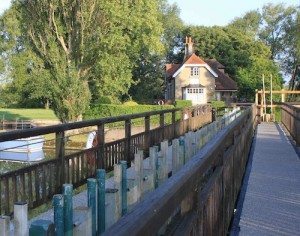
 The tall straight trees on the campsite are Cricket Bat Willows, grown to make cricket bats. Please do not do anything to them which might damage the bark – once the bark is damaged it allows infection into the trunk of the tree, staining the wood and effectively writing it off as a cricket bat tree. It will then need to be felled and disposed of and a new tree planted. The overall cost amounting to a sum in excess of £1,000!
 No fireworks or Chinese lanterns – you never know where they will land and they can and do cause significant damage to property and wildlife. Some have been known to set light to hay and corn fields and barns full of hay and straw destroying vital winter feed for cattle, horses and other livestock. In June 2023, a chinese lantern landed on the windscreen wipers of a vehicle in Newport Industrial Estate, where it smouldered until a large fire broke out. 14 cars were destroyed though the fire services were able to protect the fire spreading to neighbouring industrial units until they brought the fire under control.
 Light campfires only
 in existing campfire areas. Even if you have a fire-pit with legs, the heat from the underside will still singe the grass, so please, stand these in your campfire area.


 or
or  image on the map to check when the station was last pumping. You need to look at the pumping stations upstream of the campsite, ie to the south and west of the campsite – Witney, Aston, Faringdon, Fairford etc. In the summer months they often don’t pump for weeks at a time and even then, only for a very short period of time.