

Northmoor Lock Station – the seventh lock station along the River Thames from its source in Cricklade – was one of the last of 44 lock stations to be built along the river, constructed as it was in 1896 by the Thames Conservancy to replace the ancient flash locks at Hart’s Weir about a mile upstream and Ark Weir downstream.
 The lock house, lock and weir are relatively unchanged since they were built.
Northmoor weir is one of only 2 remaining complete Paddle and Rymer (or rimer) manually operated weirs and the only one to still control the full span of the river.
Unique to the Thames, it is thought there are no other such weirs in the world.
Have a look at this website which gives some history of weirs and how locks became the solution to some of the issues:
The River Thames and Boaty Things – Locks
Lock stations comprise of 3 parts:
-
- Lock, used to make rivers navigable.
- Weir, used to control water levels in rivers.
- Cottage, providing somewhere for the lock keeper to live.
A lock is a device for raising and lowering boats between stretches of water of different levels on river and canal waterways. The distinguishing feature of a lock is a fixed chamber in which the water level can be varied; whereas in a caisson lock, a boat lift, or on a canal inclined plane, it is the chamber itself (usually then called a caisson) that rises and falls.
Locks are used to make a river more easily navigable, or to allow a canal to take a reasonably direct line across land that is not level.

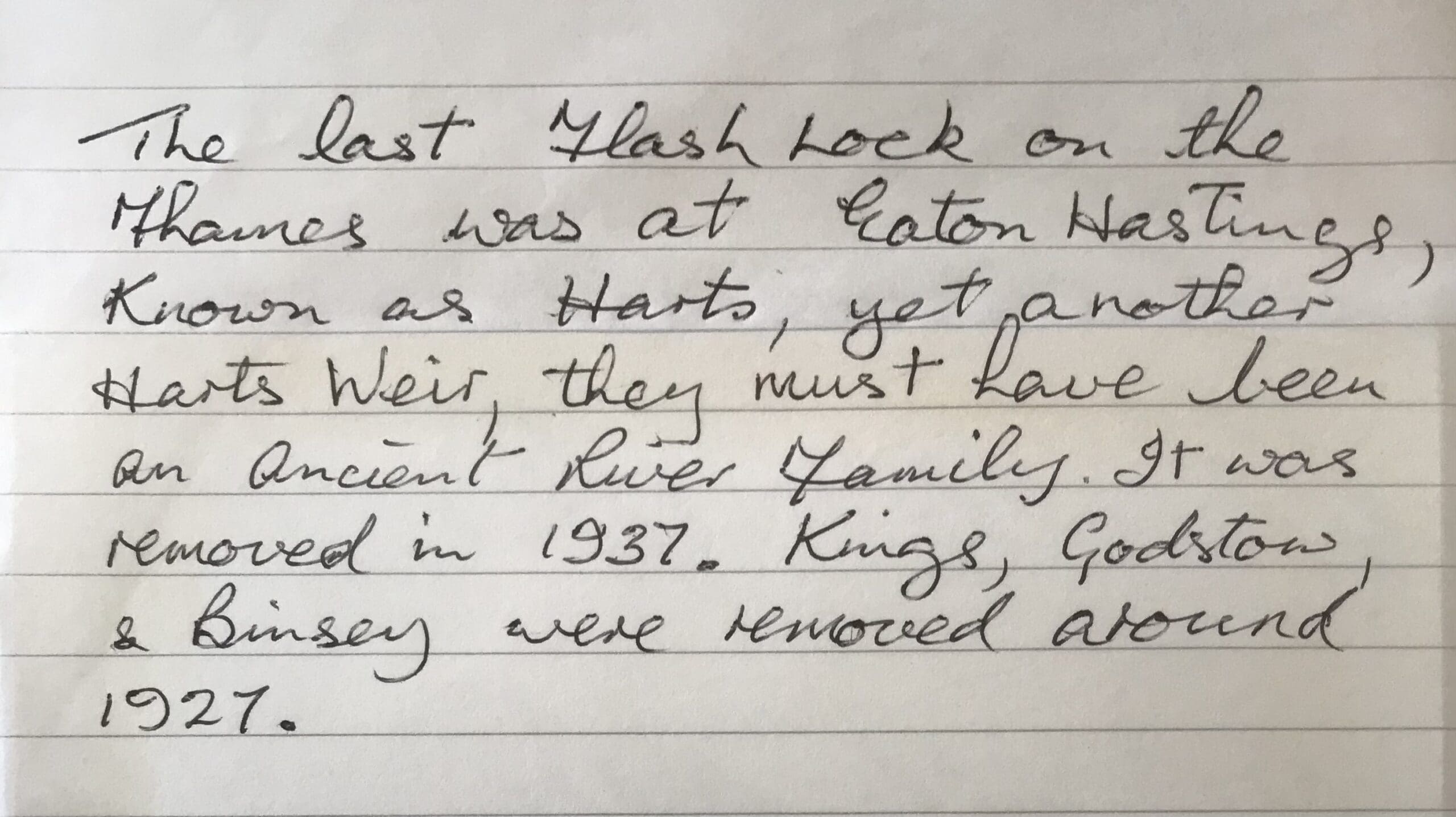
A pound lock, as above, is a type of lock that is used almost exclusively nowadays on canals and rivers. A pound lock has a chamber (the pound) with gates at both ends that control the level of water in the pound. In contrast, an earlier design with a single gate was known as a flash lock.
Take a look at this Environment Agency leaflet: Locks and Weirs on the River Thames
(the link says the document is out of date – but the operation of the lock hasn’t changed since it was built in 1890 so it’s pretty much still good to go!)
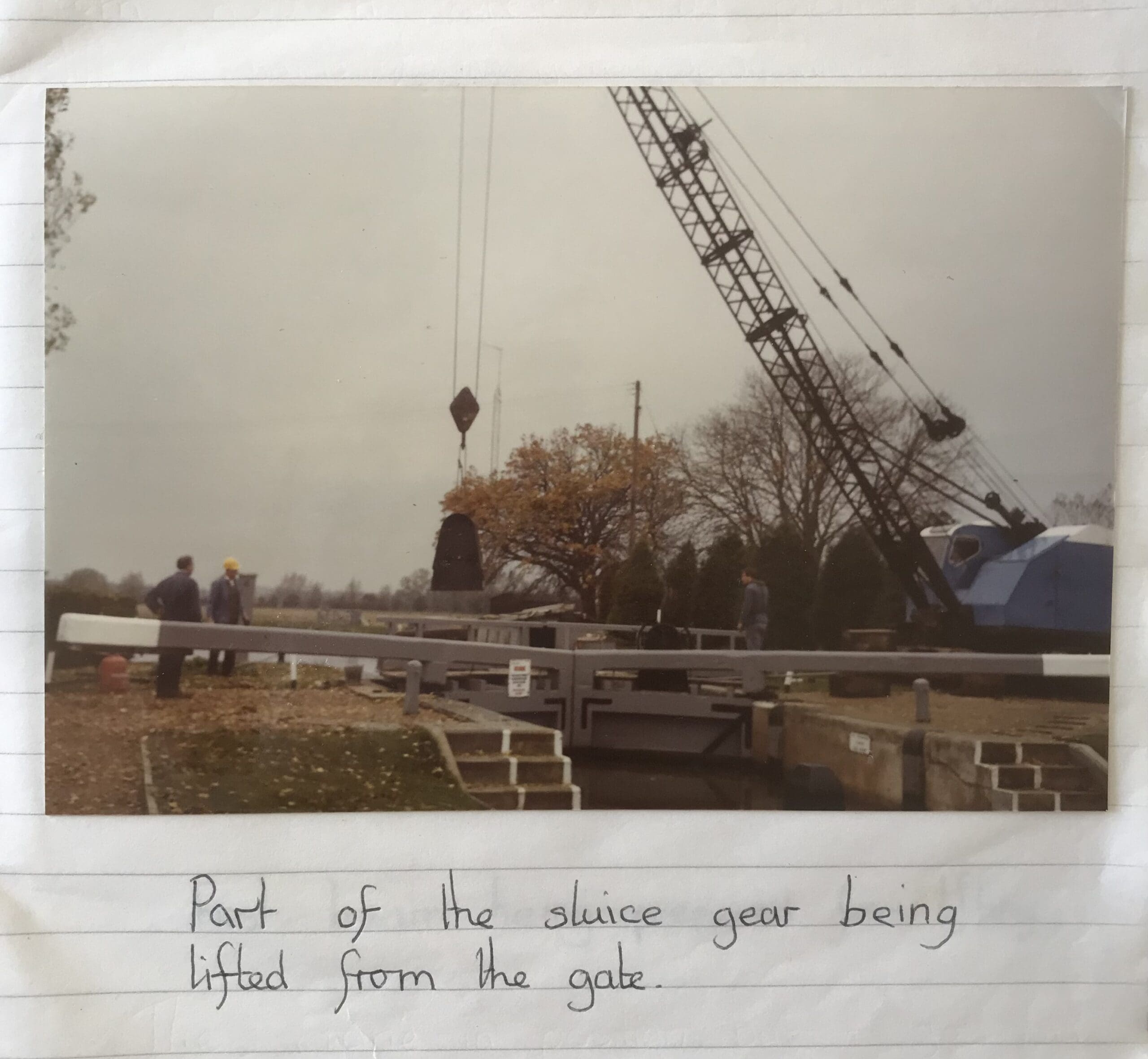
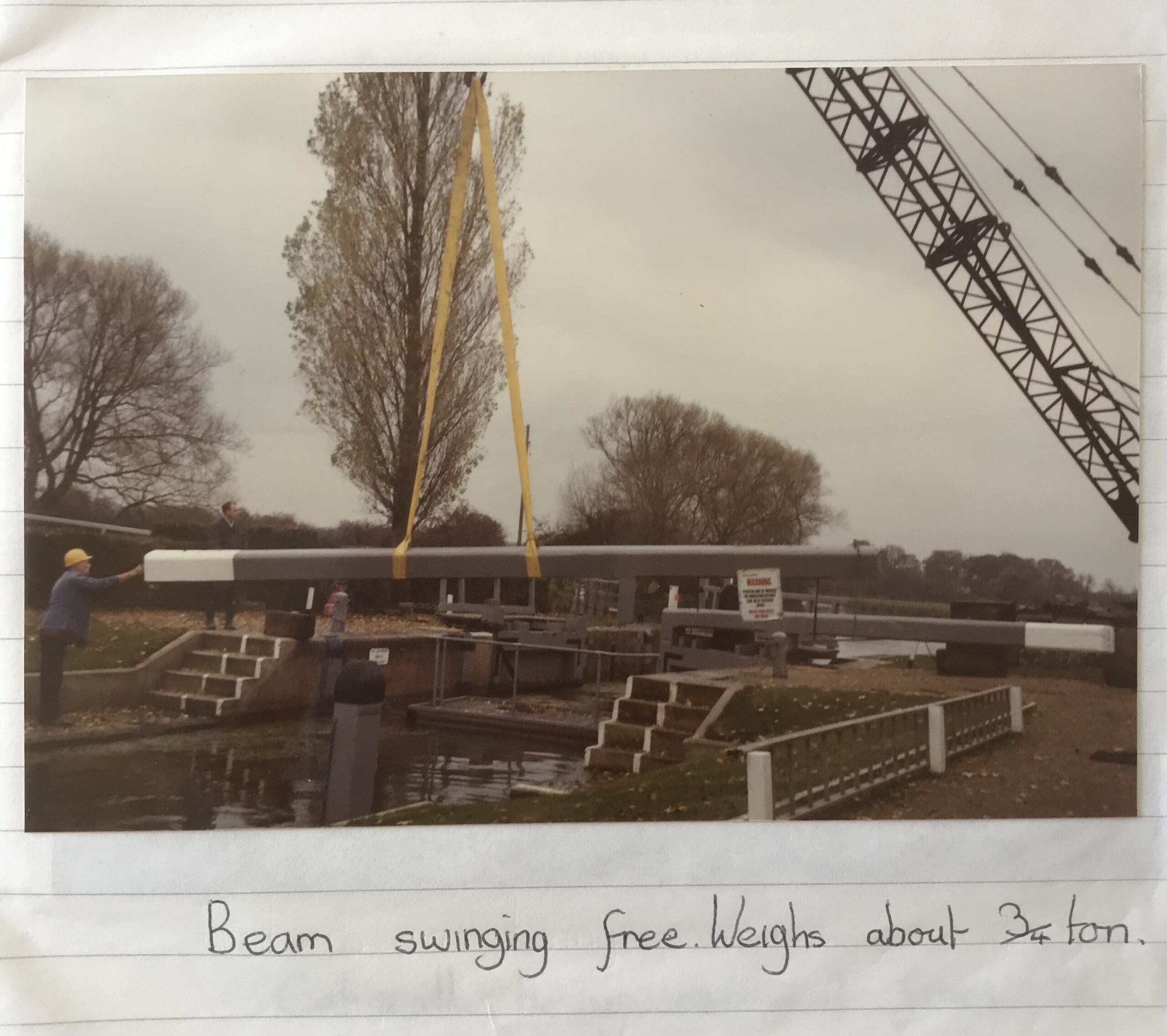
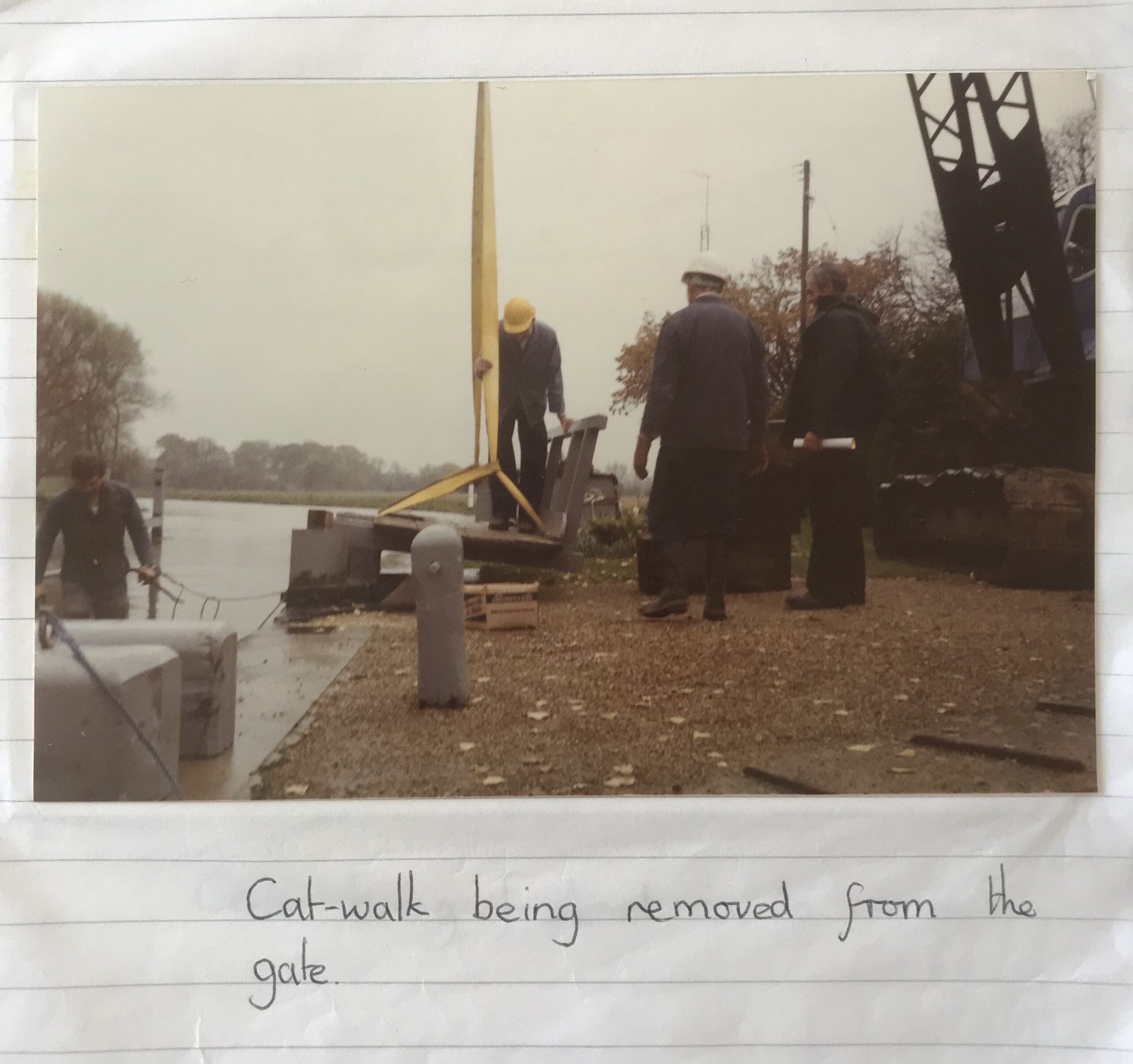
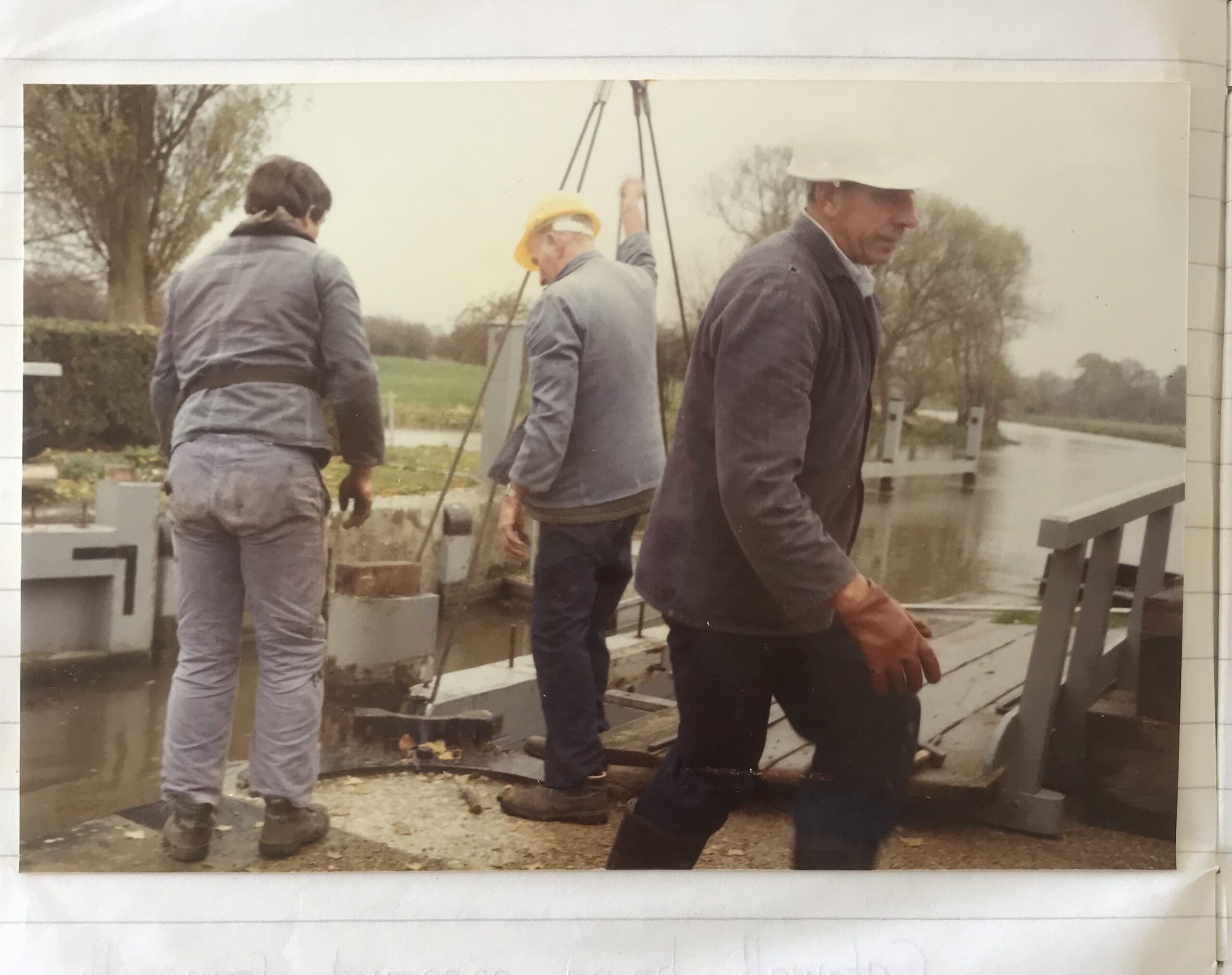
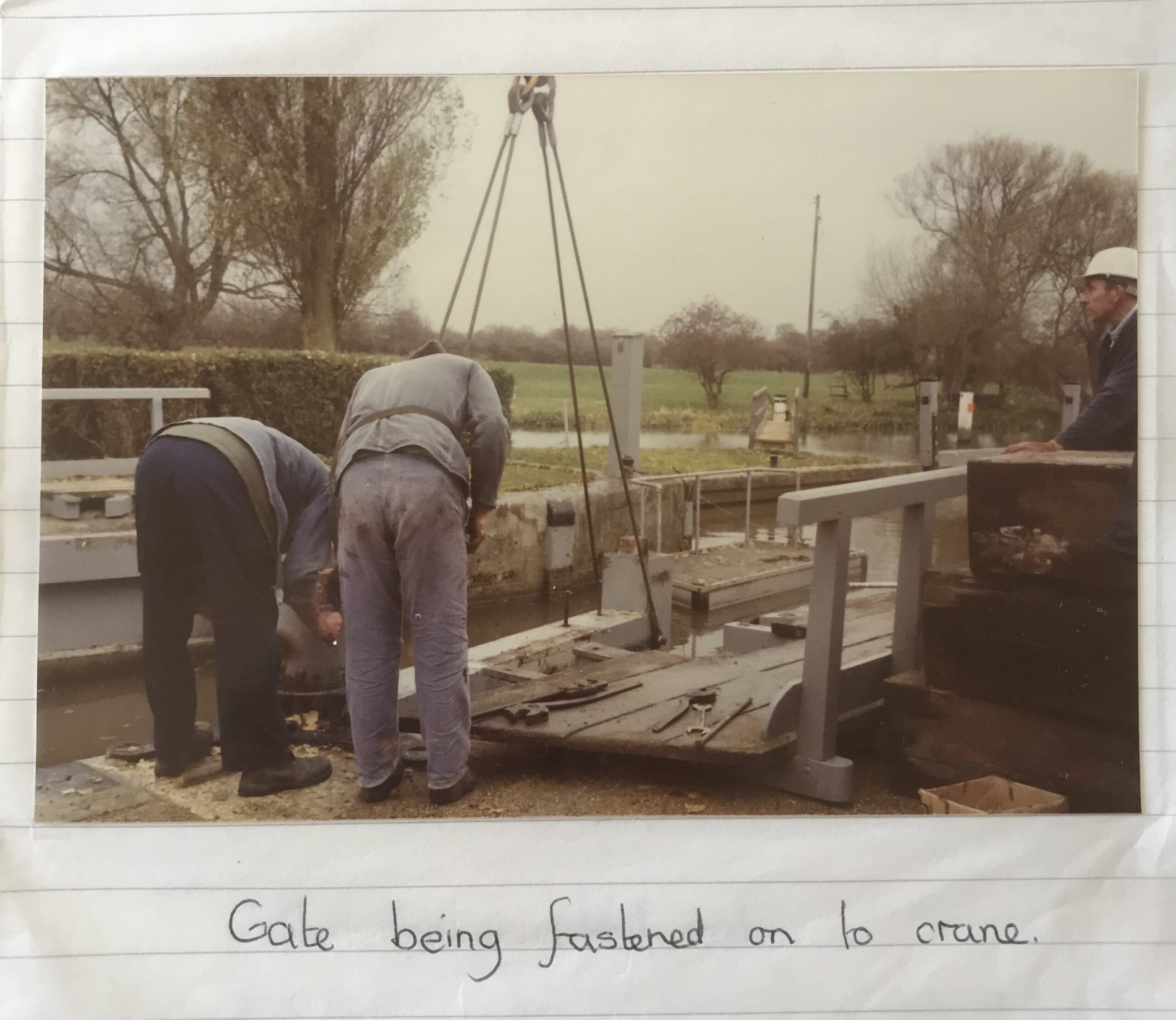
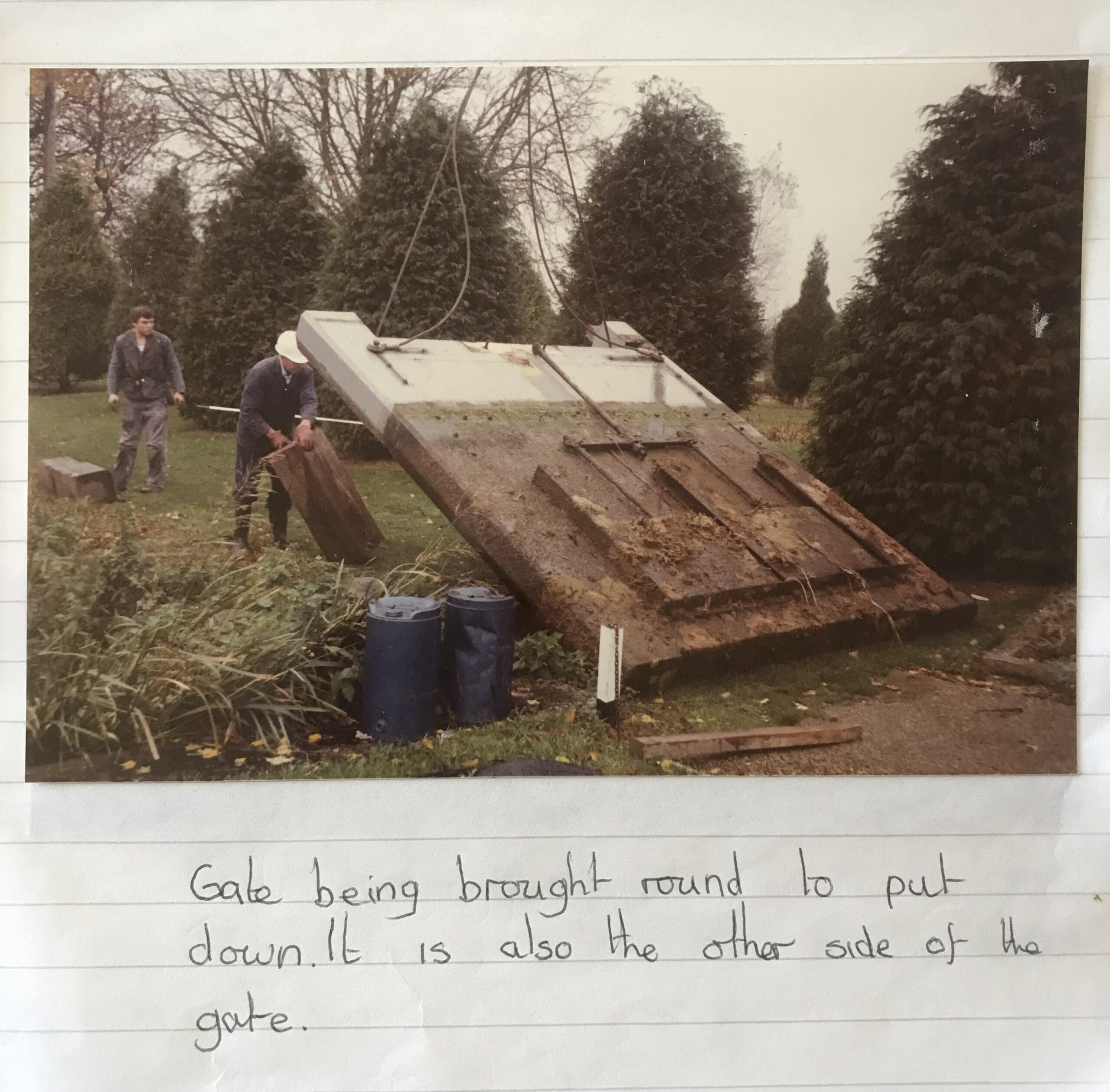
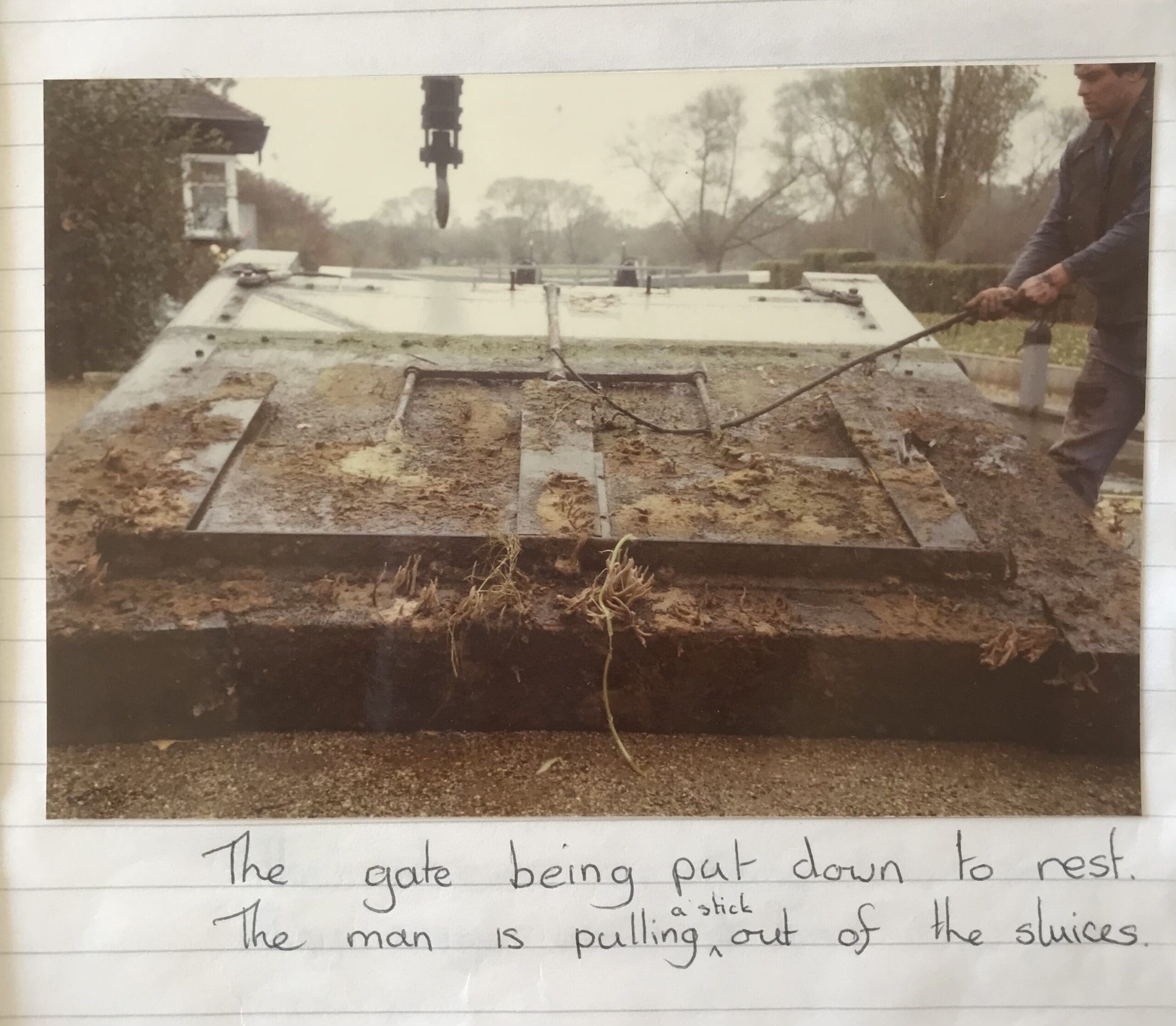
In the late 1980s, the lock gates at Northmoor were removed, either for cleaning or replacement. Jamie Buddin’s father, Colin, was lock keeper at the time (and for over 30 years). Jamie took the day off school to photograph the removal of the gates and created this interesting this report.
Thank you Jamie. A great piece of history.




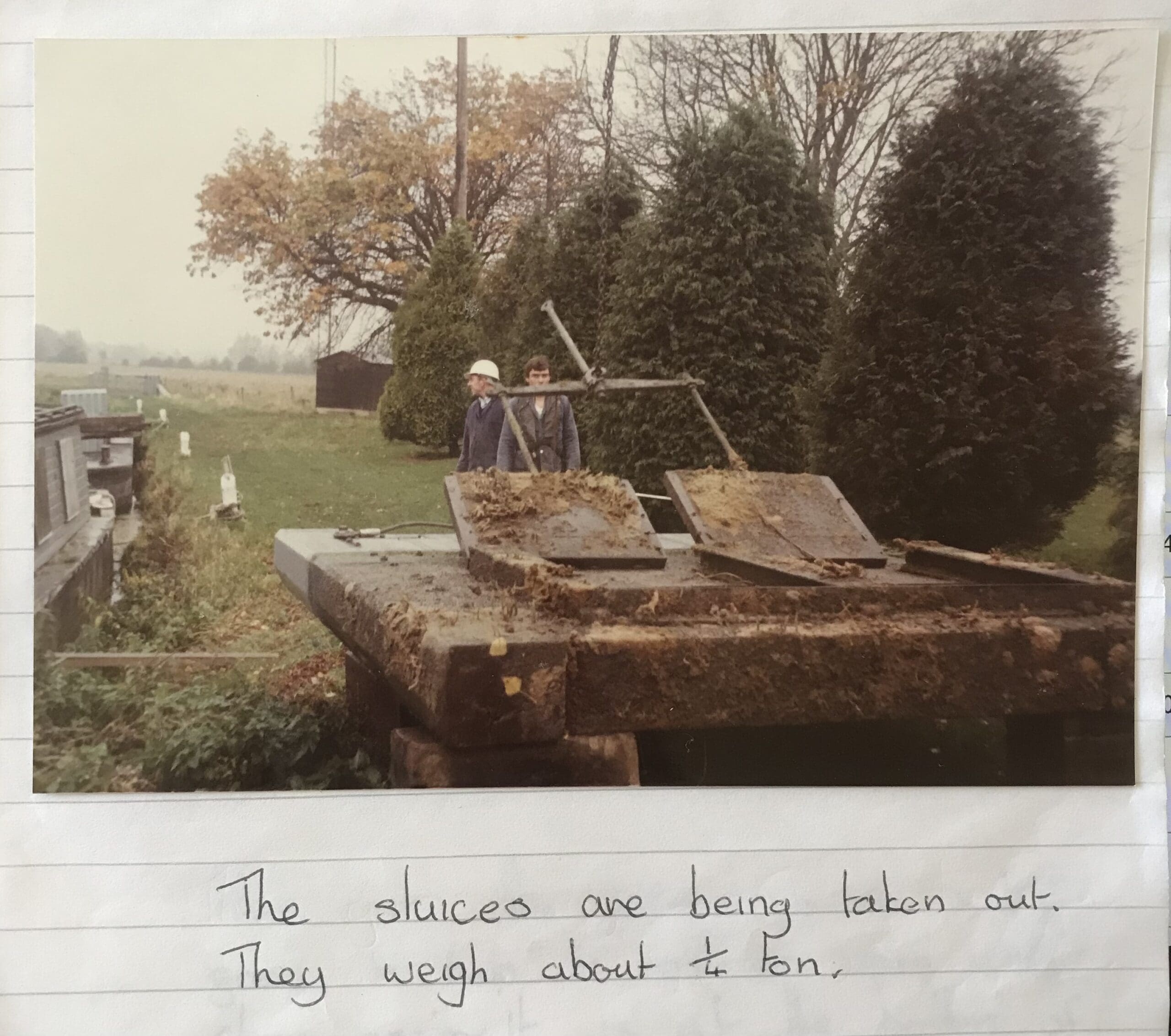
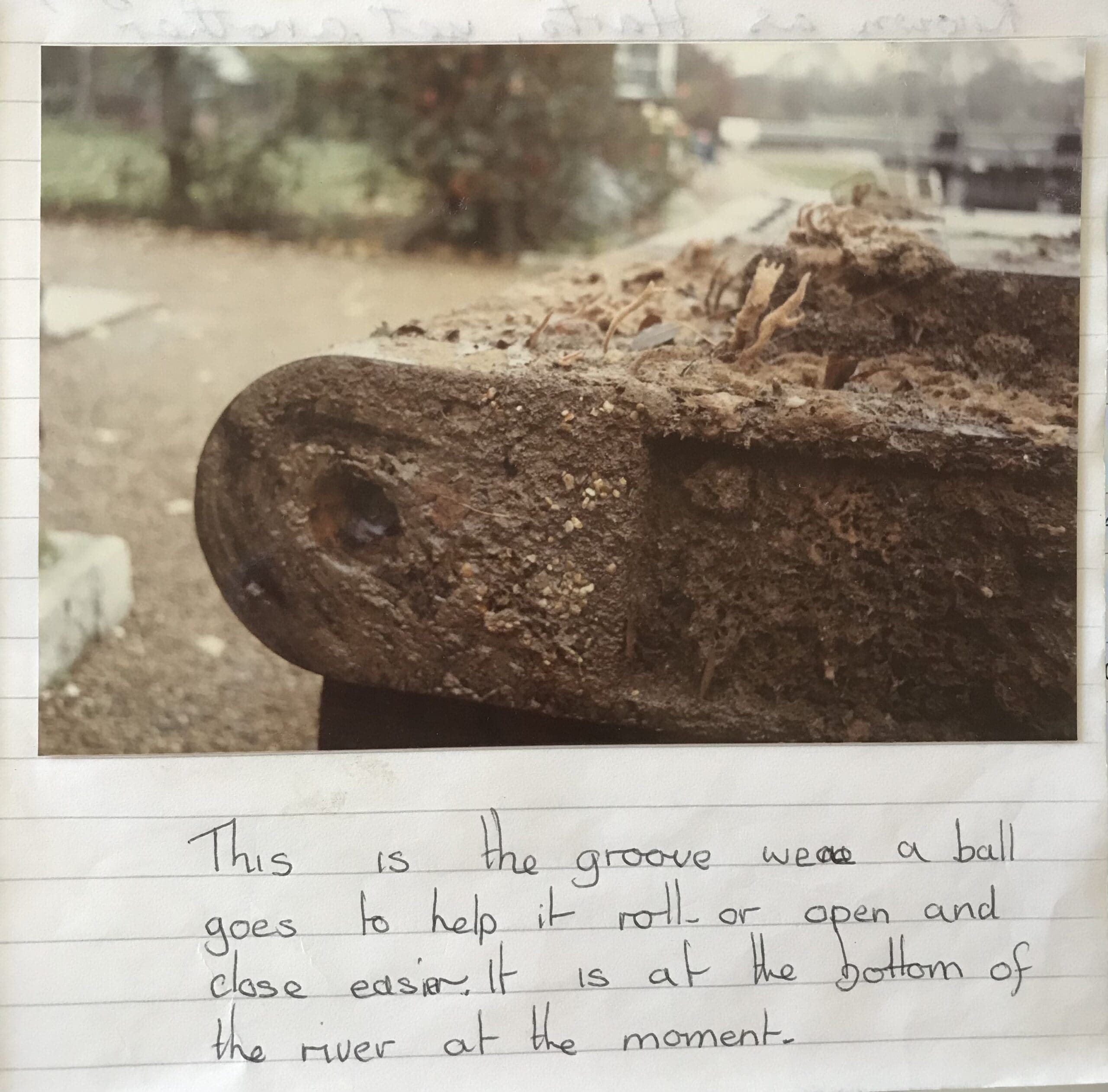
Weirs are used to control water levels in rivers. In navigable rivers, levels need to be adjusted to ensure that there is sufficient water to allow boats to float. Historically they were also used to provide a head of water for mills and to manage fisheries. Weirs are also used to manage flows in rivers and to reduce flood risk.
After rain, the water levels in streams and rivers rise and the flows increase. To deal with this, weirs are opened (the term used is “pulled”) to allow more water to flow through. This is done progressively and steadily as levels rise – the pulling of large amounts of weir in a short period of time could cause surges in the river that would generate increased riverbank erosion and possible flooding downstream.
The weir keepers on a river (and their managers) communicate information to one another to ensure that the amount of pulling is managed river-wide. The most important information communicated is the amount of rain that has fallen at the various gauging stations in the catchment area, the flows in the river and its tributaries (again collected telemetrically from various stations) and the water levels at each lock.
 This last item is important. Each lock has a measuring “stick” which shows the target level for that lock (“headwater level”). The weir keeper should always use his weir to try to keep the water at that level or close to it. There is an acceptable range of a few inches above and below headwater level. If a lockkeeper decides to pull some of his weir to achieve the target level he must let the lockkeepers downstream know what he is doing. This enables them to consider whether they also need to pull some of their weirs.

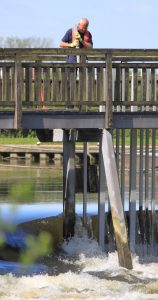
Once the weir is fully drawn, as in the picture above, there is nothing more the weir keeper can do to prevent the river from rising further. Flooding of land and property occurs only after the weir has been fully opened – normally some days afterwards. Clearly, if the weir keeper failed to open his weir fully, flooding could occur earlier.
So what happened in the floods of 2007?
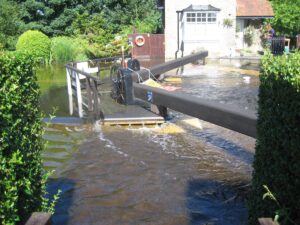 Heavy rain started falling in the Cotswolds on 19th July. The Meteorological Office predicted that this would continue into the 20th. In the light of warnings issued, and steadily increasing river levels, lock keepers started opening the weirs on the morning of the 20th. At the start of the day weirs were partially open and by the end of the day almost all of the Upper Thames weirs were fully drawn. The lock keepers at the paddle and rhymer weirs were offered assistance, but by working steadily and by taking sensible breaks the Northmoor lock keeper was able to complete the task himself by mid-afternoon.
So the weir at Northmoor was fully open by teatime on the 20th. The Thames tributaries which rise in the Cotswolds began to flood around lunchtime on Saturday 21st and parts of the Thames rose above its banks later that day. The worst of the flooding began on Sunday 22nd and into the following week. The water remained high for some two weeks. If the weir at Northmoor had been mechanised it would have been opened in tranches over the same time frame (as were the mechanised weirs elsewhere in the area). Indeed, the pulling of one of the upper Thames mechanised weirs was completed on the morning of the 21st.
During dry periods river levels and flows reduce and it is the weir keepers’ role to hold back the water in the river by closing (“shutting in”) the weirs. Again this is done progressively.
Is pulling (or shutting in) a complete weir hard work? Yes, but so are many other manual jobs. It is extremely unlikely that the whole weir would need to be operated in one working day, as moving a weir from fully shut in to fully open would create a rush of water down the river which could be extremely dangerous. This in itself could well cause flooding and would cause great danger to people on boats.
Safety and Training
Weir keepers have to be trained in the operation of each individual weir on which they will be expected to work. They also have to have manual handling training and water safety training. Much of this training is the subject of regular “refresher” training. Their immediate managers are trained in managing safely and in risk assessment. The Environment Agency also employs specialist in-house safety advisors. In conjunction with the unions, the management and the lock keepers, these advisors have produced risk assessments and safe systems of work (as required by the legislation) for all of the lock and weir keeper’s tasks (including the operation of paddle and rhymer weirs).
Because the work at paddle and rhymer weirs involves rather more manual handling than on other types of weir, it is essential that the staff operating them fully understand the “rules” for manual handling. They are also advised to be aware of their own limitations and that they should ask for assistance it they feel that they need it.
There is a right way and plenty of wrong ways to pull a paddle and rhymer weir, much in the same way as there is a right and a wrong way to lift a heavy sack or hay bale – knees bent, back straight etc – to prevent injury. That is why training is essential to the safe operation of a P&R weir, as it is for any other manual task.
If the paddle and rhymer weir keepers work steadily and sensibly there is no reason why they should come to any harm. Indeed the accident and injury record at such weirs has, in the past, been very good indeed with only a very few minor injuries occurring over a 10 year period.
Paddle and Rymer Weirs
Paddle and rhymer weirs are an ancient form of weir, recorded over many centuries, and were predominant on the River Thames. They are simple, effective and have allowed precise and delicate control of water levels by the skill of generations of weir keepers. They are manually operated and, in theory, the working parts could be made by anyone who has a basic knowledge of woodworking. They are not dependant of having an electricity supply.
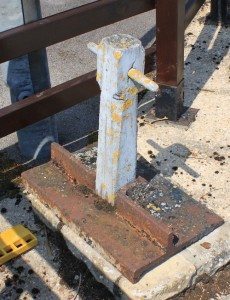 Such weirs consist of a series of metal sockets on the riverbed (the “sill”) and a stout beam well above water level directly above the sill. Stout upright posts (“rhymers”) are slotted into a socket and leaned into a slot in the upper beam. The pressure of the water holds them in place. A pair of rhymers provides the support for the paddles which, when in place, hold back the water in the river. This section of sill was removed from the riverbed in order to crete a fish-pass when the weir was refurbished in the 1990’s. The lock keeper at that time, Colin Buddin, asked if this section of sill could be installed beside the weir, with the top of an old rhymer, for visitors to see.
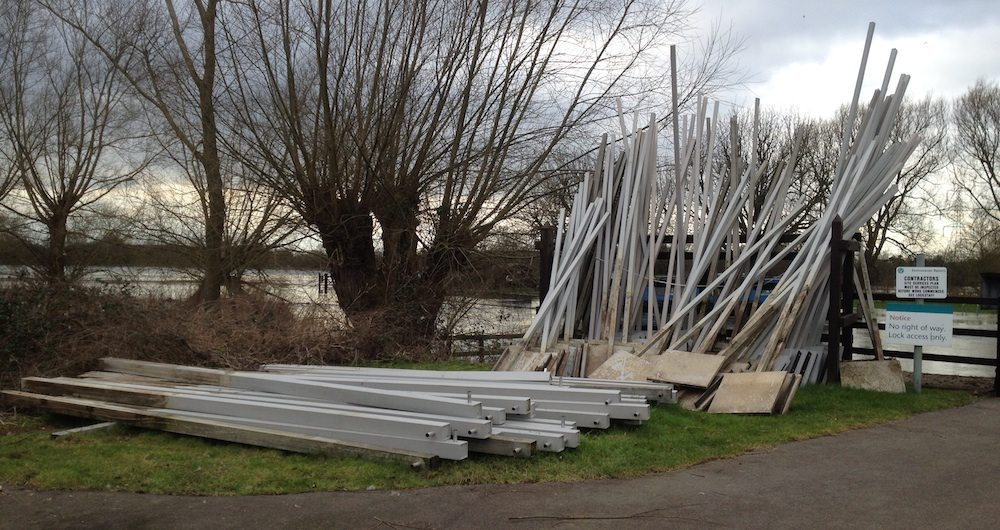
The paddles are basically square boards (approximately 2ft x 2ft) attached to a long pole. They have flanges on either side to hold them in the correct position between the rhymers. The pole enables the weir keeper to pull the paddles out or slide them into the weir. Normally the paddles are stacked in the water in “sets”, one above the other, 2 or 3 paddles high. Northmoor Weir has 14 sets of 2 paddles, 22 sets of 3 paddles and 36 rhymers. The weir also has a walkway on which the operator stands and a wire rope to which the operator, wearing a special harness, clips himself. There are fenced compounds at each end in which the paddles and rhymers are stacked whilst not in use. There will be more paddles and rhymers that are required to completely shut in the weir. This is necessary as there are breakages from time to time and occasionally a paddle or a rhymer is “lost” and floats off down river.
If the weir keeper wishes to pull part of his weir he will clip himself to the safety wire and stand directly in front of the paddle he wishes to remove. He will grasp the top of the pole to which the paddle is attached and will pull it towards himself. The paddle will then be at an angle to the flow of water and water pressure will assist with the lifting of the paddle. Using the edge of the walkway as a fulcrum, the keeper will raise the paddle onto the walkway and ‘walk’ rather than carry it to the paddle store. He will repeat this procedure until he has removed the requisite number of paddles. When a number of paddles have been removed the associated rhymer will no longer be needed to support paddles. This too is removed by pulling it back against the walkway at which juncture it pops out of the socket and attempts to float off downstream. However, the weir keeper will be holding onto the pair of handles at the top of the rhymer and will use these to drag it out, with the walkway supporting part of its weight.
 The procedure is reversed if the weir keeper wished to shut in his weir. He will first put a rhymer in place. This is the part of the operation that takes most skill. It is not difficult to get the bottom of the rhymer into its socket, but someone who has not practiced doing so will find the exercise frustrating at first. It involves a degree of technique that can only be learned under supervision and the sense of satisfaction when the skill is mastered makes up for all the training, practice and frustration of not getting the hang of it. Once the rhymer is firmly in place the paddles are simply slid down (between a pair of rhymers) into the water. If they do not bed in firmly, a rubber mallet can be used to bang the top of the poles to push them down into place.
The other important task that all weir keepers have to undertake is the removal of rubbish from the weir. Branches, reeds and other vegetation are carried down river by the current. Inevitably some of this gets trapped on the weir. If it is not removed regularly it will build an additional “natural” dam that will have the effect of shutting in the weir more than is wished. Also, if left for too long, the accumulation of rubbish will make it difficult to operate the weir. A weed rake is used either to lift debris off the weir or to encourage it to move to an open part of the weir to allow it to float off downstream.
Chris Mullinuex
Lockkeeper / Boatman 1999 – 2003
Team Leader Upper Thames Navigation 2003 -2009
February 2012

A postcard from 1907
Additional ‘Then and Now’ images of Northmoor Lock Station:

- Northmoor Weir around 1906
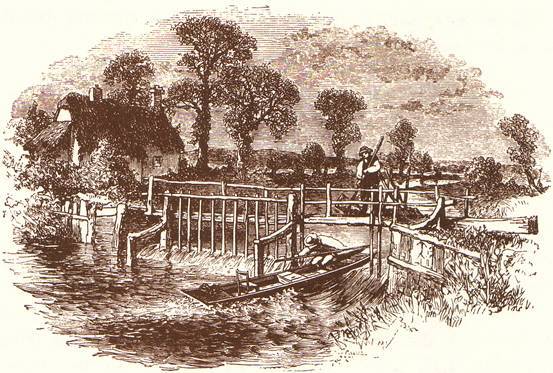
- Harts Weir 1859
In 2002, Michael Trueman BSc MA MIFA prepared a report on behalf of English Heritage and the Environment Agency, the purpose of which was to assess the archaeological and historical importance of a group of 11 Thames weirs with paddle and rymer sluice gates.
Northmoor weir was one of the 11 weirs assessed.
Michael has given permission for the information relating to Northmoor to be shared on this website:
Trueman 2002 – Thames Paddle and Rymer Weir Archaeological Assessment – Northmoor
In 2004, English Heritage and the Environment Agency asked Michael to prepare another report, ‘an audit and assessment of the heritage assets controlled by the Environment Agency along the non-tidal reaches of the River Thames.‘
This report followed on from the 2002 report of the paddle and rymer weirs and included, amongst other things, locks, lock houses, lock offices etc. collectively known as Lock Stations.
Trueman 2004 – Audit of the Heritage Assets of the non-tidal River Thames – Appendix B – Northmoor
In 2008, Michael’s 3rd report updated the previous assessments on the heritage value of the paddle and rymer wiers on The Thames, as part of the Environment Agency’s appraisal of the possible replacement of each of the paddle and rymer weirs.
Trueman 2008 – Paddle and Rymer Weir Replacement Project Heritage Review
There’s a lot of information in these reports and it’s worth looking through them as there is some interesting general historical information about the operation of locks and weirs on the Thames.
If you would like to read the reports in full, you will be able to do so at the Historic England Archive National Office in Swindon later this summer (2025) Email library@historicengland.org.ok to make an appointment.
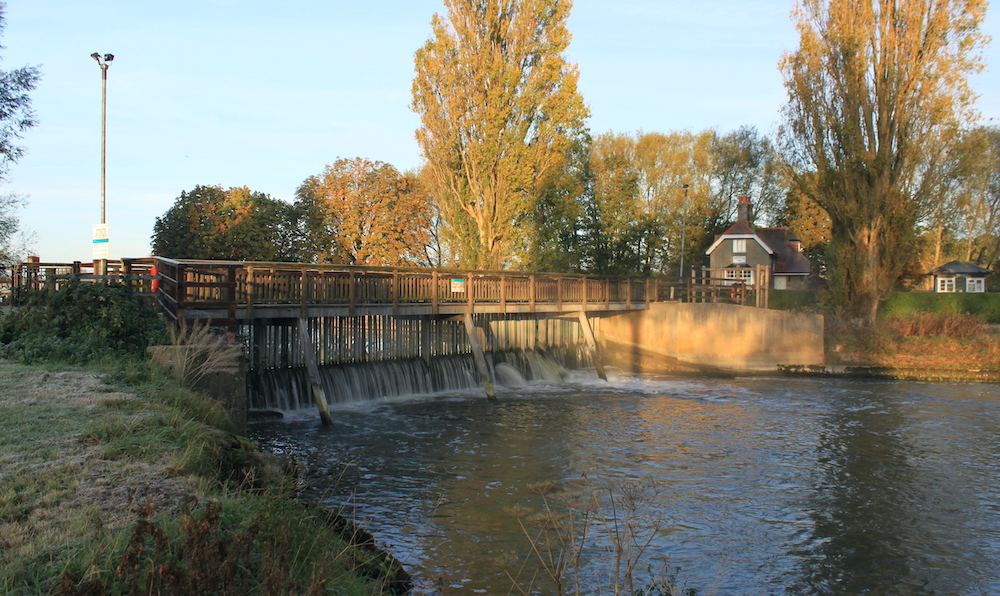
As a result of the EA’s mechanisation programme, Northmoor is the last remaining, full-span paddle and rymer weir on the Thames.